My doctor glanced at my chart during a routine physical and said, almost offhand, “I see you’re a right-handed hunter.”
Wait what, how did she know that? She explained that my left ear was testing at the low end of normal, my right ear at the high end – a differential that told the story without me having to say a word. Decades of muzzle blast, with left ear pointing toward every single shot.
That got my attention. Once your hearing is gone, it’s gone. I can’t get back what I’ve already lost, but I can stop making it worse. That conversation is what started me taking hearing protection seriously.
The Long Road to Getting Serious
I’ve tried everything over the years, working my way through the usual progression. Cheap foam earplugs work fine on a bench at the range where you’re not talking to anyone and you’re not going anywhere. Electronic earmuffs are better — you can hold a conversation, hear what’s happening around you, and get better protection. But try wearing earmuffs for six hours of upland hunting and you’ll understand the problem. They’re hot, they get in the way of your gun stock, and for me are just not comfortable to wear when hunting or trap shooting.
My field compromise had become wearing a single foam plug in my left ear — protecting the ear that was already taking the most damage, sacrificing the other, and telling myself it was good enough.
It wasn’t good enough. But I didn’t have a better option until I found the SoundGear Phantom.
What Makes the Phantom Different
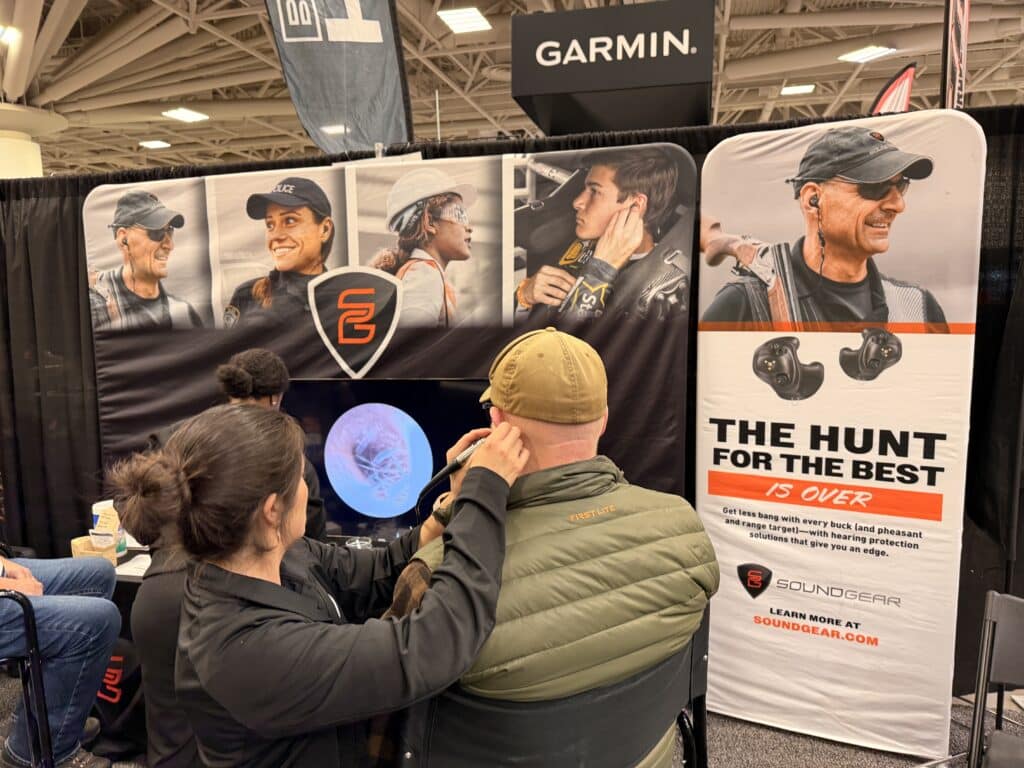
The Phantom isn’t a modified earmuff or a glorified earplug. It’s a custom in-ear electronic hearing protector – and the word “custom” means something here. Getting fitted requires a visit to an audiologist or a hearing instrument specialist who takes a physical mold of your ear canal. I had mine done at Pheasant Fest. The whole process takes about 15 minutes. That mold becomes the basis for a device built specifically for your ear, not for the statistical average of human ears.
A Hearing Instrument Specialist checking out my ears for the SoundGear Phantoms.
Pro tip: Clean your ears thoroughly before your fitting appointment. The mold-making process works better, and you’ll thank yourself later.
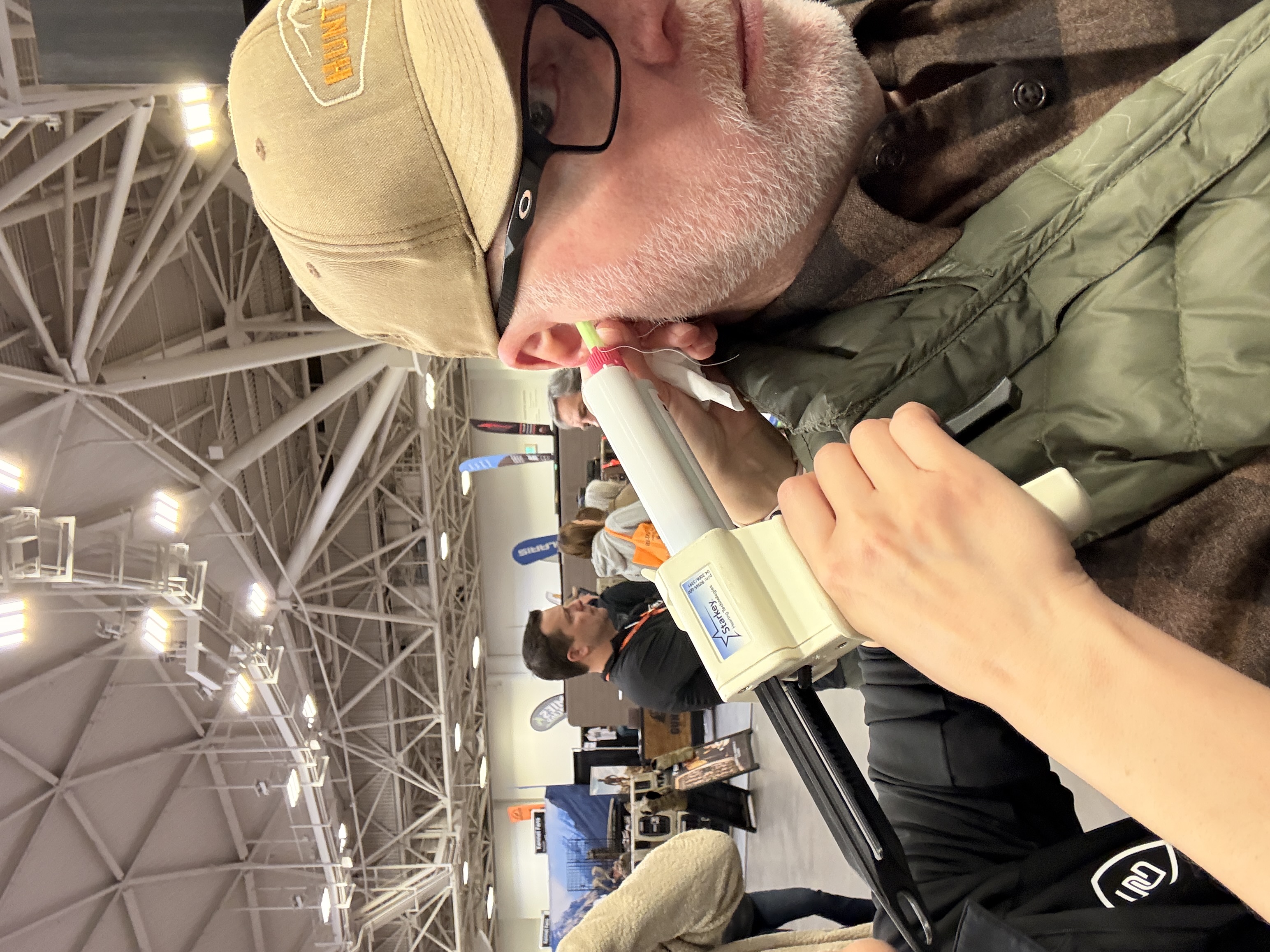
Filling my ear canal with “goop” to make a mold of the inner ear.
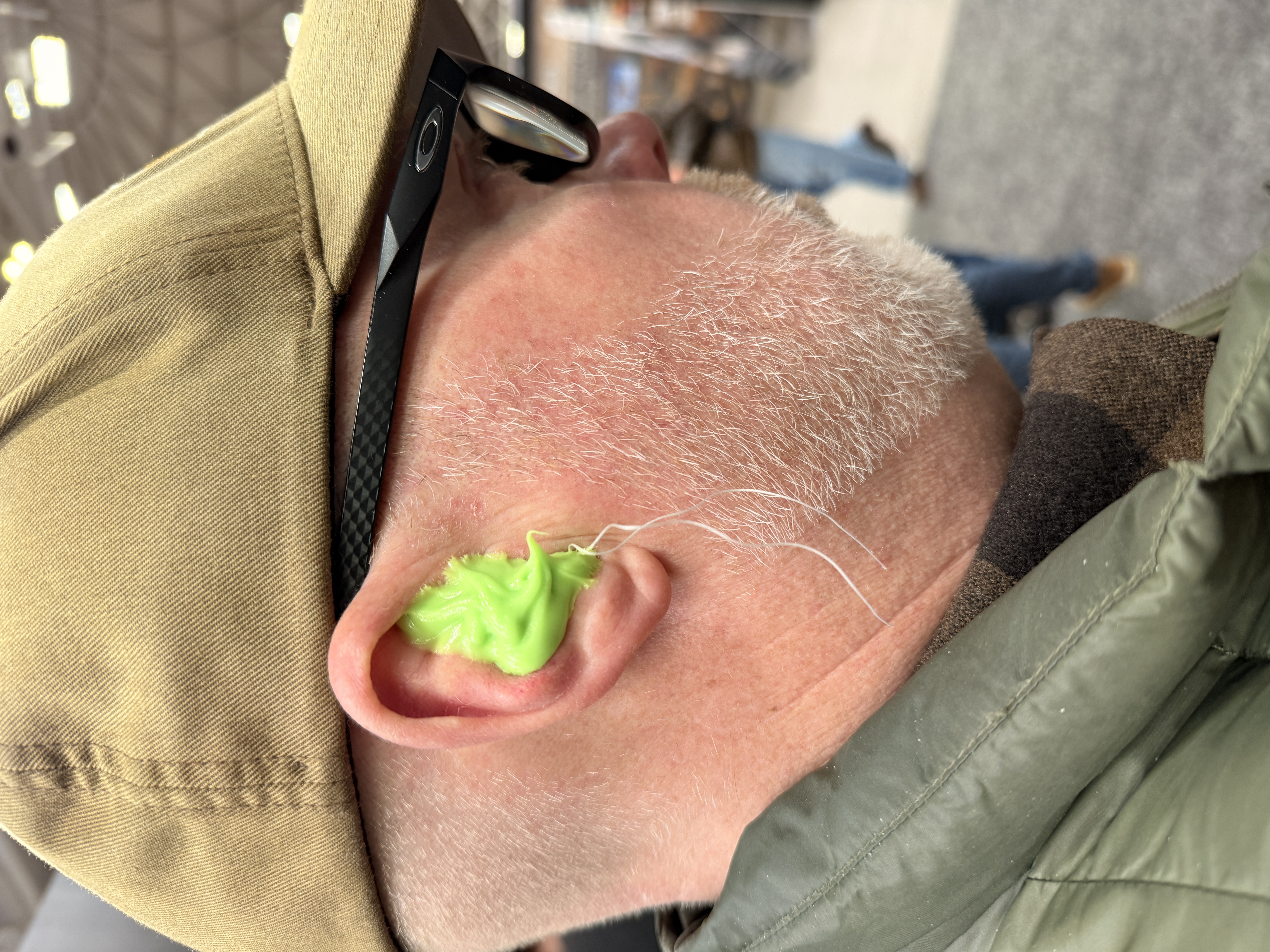
The goop needs to set up for a couple of minutes before removal.
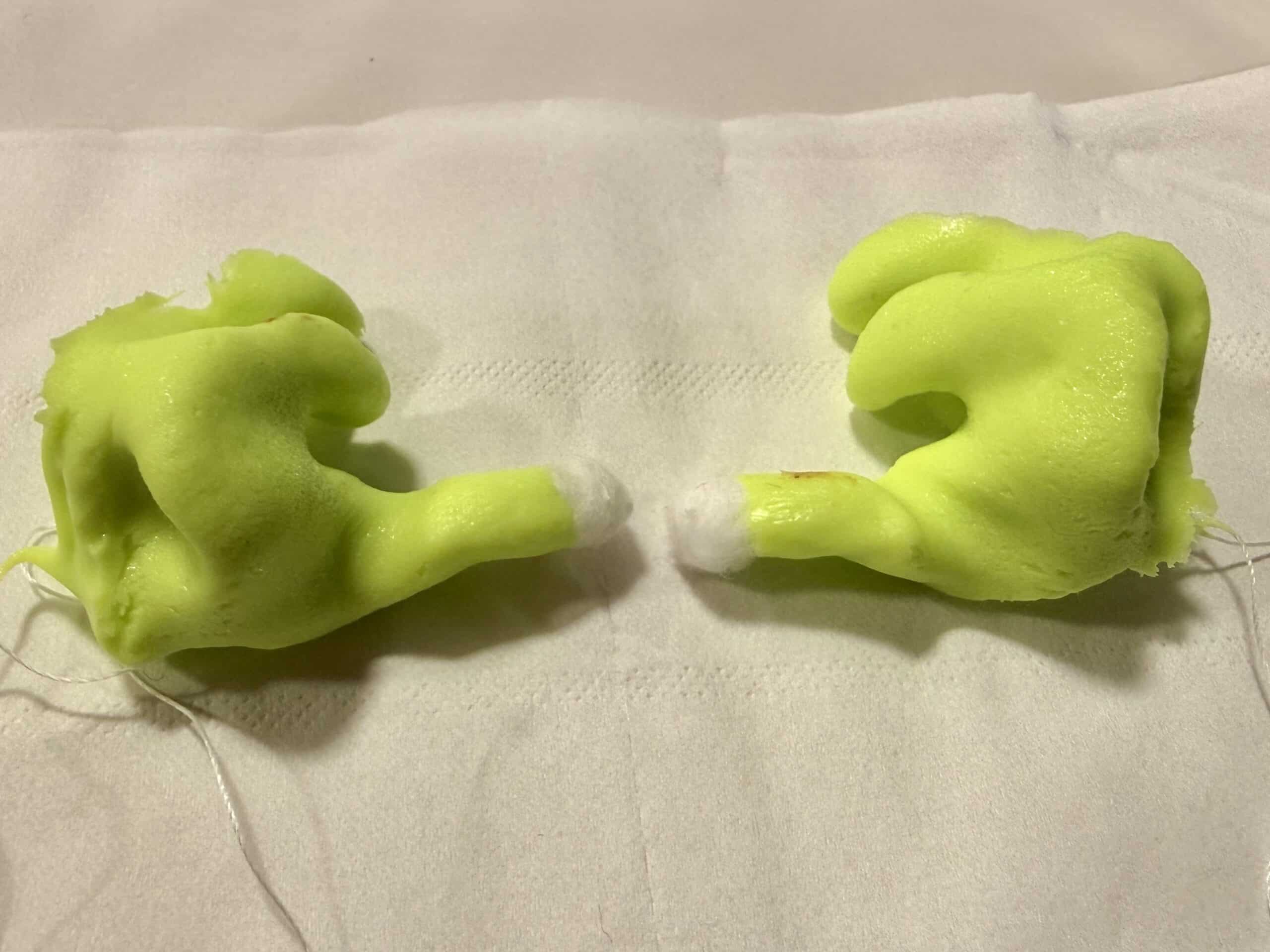
And there you have it, a perfect mold of my inner ear and the form for my custom SoundGear Phantoms.
About a little over a week after my fitting, my custom Phantoms arrived. They fit the way custom-made things fit – perfectly, from the first time you put them in. No adjusting, no repositioning, no wondering if they’re seated correctly.
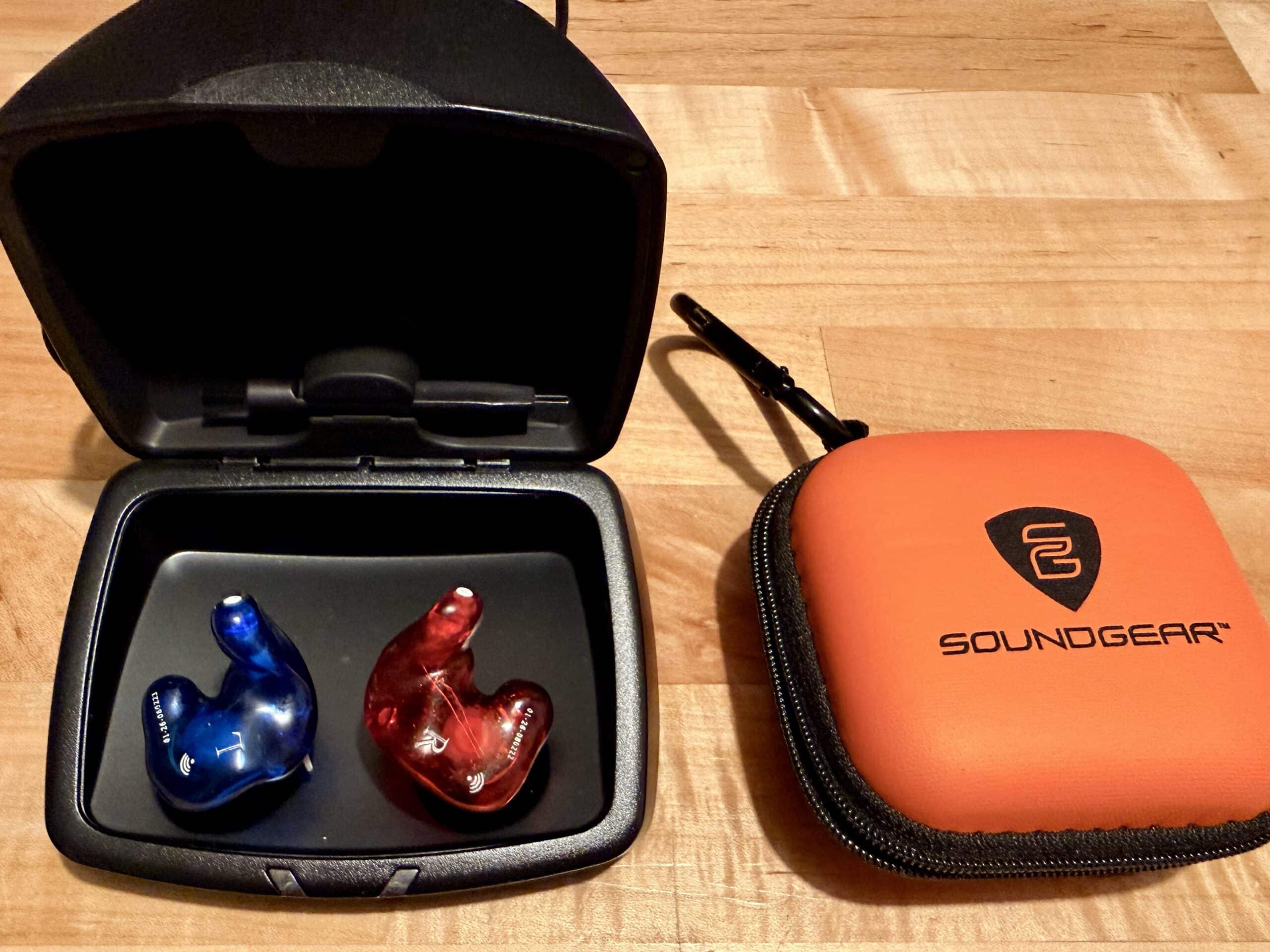
The Phantoms come with a charging case, a handy field carrying case, lanyard and charging cable. I ordered my Phantoms in red and blue for easy ear identification, other colors are available.
In the Field and at the Range
Minnesota finally warmed up enough to get to the range, and I’ve now had real time with these. Here’s what matters:
The Phantoms offer four pre-programmed digital memories for different listening environments. There’s a normal mode, a wind noise management mode (the Advantage Wind system — genuinely useful when you’re standing in an open field), a high-frequency boost mode designed for shooters who already have some level of hearing loss, and a full mute mode that cuts the microphone entirely. Cycling through them is intuitive enough that you stop thinking about it after the first range session.
In normal mode, I can hold a completely natural conversation. I’m not raising my voice. My hunting partners aren’t repeating themselves. I’m just talking, while my ears are sitting behind 22 dB of noise reduction, waiting for the shot that requires it. The omni-directional microphones pick up environmental sound – including birds working in the cover – and pass it through cleanly.
That last part is the whole game for upland hunting. The reason I’ve suffered through years of foam-plug compromises is that I need to hear in the field. I need to hear the dog change pace when she’s getting birdy. I need to hear a rooster flush thirty yards to my left before I ever see it. Wearing two foam plugs turns upland hunting into a silent film. The Phantom gives me full environmental awareness right up until the moment I need protection, and then delivers it without me touching a thing.
The Specs Worth Knowing
The Phantom runs on a lithium-ion rechargeable battery good for 23 hours, including four hours of streaming. It connects via Bluetooth to both Apple and Android devices, which means phone calls, podcasts, and music all come through the same device protecting your hearing. The 2.4 GHz streaming technology handles audio without the dropouts you get from older Bluetooth implementations.
At $1,599, (at this writing) this is not an impulse purchase. It’s a considered investment in a device that is, according to SoundGear, the world’s first and still most popular custom rechargeable Bluetooth-compatible hearing protector. The price reflects the custom fitting process, the FDA-listed hearing aid functionality (yes – if you have measurable hearing loss, these can be programmed to compensate for it, up to 30 dB of gain), and the quality of the hardware itself.
The moisture protection matters too. The Surface Nanoshield coating and Hear Clear wax protection system mean these hold up in the conditions hunters actually hunt in, not just ideal range conditions.
On the Lanyard
The Phantoms come with a removable lanyard system to connect the two earpieces. I’ve been wearing mine without it. The custom fit is so precise, I genuinely cannot imagine one working loose in the field. I also prefer my gun mount without the tether. That said — if you’re hunting in heavy cover and the thought of losing a $1,600 device in a cattail marsh bothers you (as it does me), the lanyard is there for a reason.
Bottom Line
I tried the Phantoms to solve a specific problem – upland hunting in hearing protection that doesn’t make me deaf to the world around me – and it solves that problem completely. It also turns out to be the best hearing protection I’ve used at the range, the most comfortable for all-day wear, and the only option I’ve found that genuinely disappears into the activity rather than fighting against it.
I can’t reverse the damage that’s already done, but I can stop it from getting any worse. And for that, the SoundGear Phantom’s are worth every penny.
SoundGear Phantom — $1,599 | soundgear.comCustom fit required through a hearing care professional. Custom charger and zipper case with carabiner clip included.
Note: HuntTested did receive product to evaluate in coordination with this article. HuntTested may receive a small commission if you purchase a product using the links on this page. HuntTested may have received product or promotional consideration in coordination with this article. All opinions belong to HuntTested.
We use cookies on our website to give you the most relevant experience by remembering your preferences and repeat visits. By clicking “Accept All”, you consent to the use of ALL the cookies. However, you may visit "Cookie Settings" to provide a controlled consent.
This website uses cookies to improve your experience while you navigate through the website. Out of these, the cookies that are categorized as necessary are stored on your browser as they are essential for the working of basic functionalities of the website. We also use third-party cookies that help us analyze and understand how you use this website. These cookies will be stored in your browser only with your consent. You also have the option to opt-out of these cookies. But opting out of some of these cookies may affect your browsing experience.
Necessary cookies are absolutely essential for the website to function properly. These cookies ensure basic functionalities and security features of the website, anonymously.
Cookie
Duration
Description
cookielawinfo-checkbox-analytics
11 months
This cookie is set by GDPR Cookie Consent plugin. The cookie is used to store the user consent for the cookies in the category "Analytics".
cookielawinfo-checkbox-functional
11 months
The cookie is set by GDPR cookie consent to record the user consent for the cookies in the category "Functional".
cookielawinfo-checkbox-necessary
11 months
This cookie is set by GDPR Cookie Consent plugin. The cookies is used to store the user consent for the cookies in the category "Necessary".
cookielawinfo-checkbox-others
11 months
This cookie is set by GDPR Cookie Consent plugin. The cookie is used to store the user consent for the cookies in the category "Other.
cookielawinfo-checkbox-performance
11 months
This cookie is set by GDPR Cookie Consent plugin. The cookie is used to store the user consent for the cookies in the category "Performance".
viewed_cookie_policy
11 months
The cookie is set by the GDPR Cookie Consent plugin and is used to store whether or not user has consented to the use of cookies. It does not store any personal data.
Functional cookies help to perform certain functionalities like sharing the content of the website on social media platforms, collect feedbacks, and other third-party features.
Performance cookies are used to understand and analyze the key performance indexes of the website which helps in delivering a better user experience for the visitors.
Analytical cookies are used to understand how visitors interact with the website. These cookies help provide information on metrics the number of visitors, bounce rate, traffic source, etc.
Advertisement cookies are used to provide visitors with relevant ads and marketing campaigns. These cookies track visitors across websites and collect information to provide customized ads.